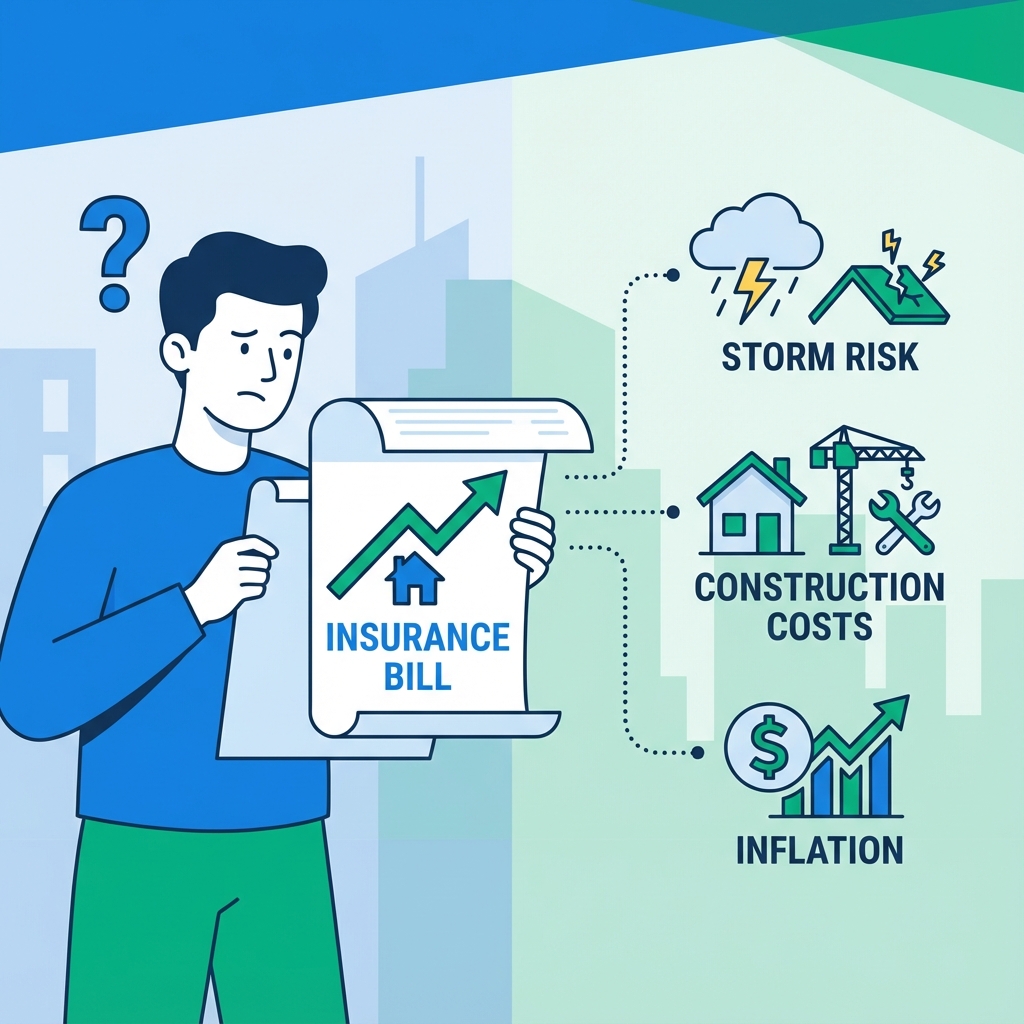
Why Is My Home Insurance So Expensive? 7 Hidden Culprits
You open the envelope, expecting a standard renewal notice, and your jaw hits the floor. Your home insurance premium has jumped—maybe by $200, maybe by $1,000. You haven't filed a claim. You haven't renovated your kitchen. So, why is your home insurance so expensive?
You are not alone. Across the country, homeowners are facing "rate shock" as premiums rise at the fastest pace in decades. While it feels personal, the reasons are often a mix of global economics, local risks, and specific details about your home that you might not even realize are costing you money. In this deep dive, we are exposing the 7 hidden culprits behind those skyrocketing rates and telling you exactly what you can do about them.
1. The "Inflation" Factor (It's Not Just Groceries)
When the cost of lumber, copper wiring, and roofing shingles goes up, so does your insurance. Remember, your policy covers the replacement cost of your home. If building a house costs 20% more today than it did three years ago due to supply chain issues and labor shortages, your insurer must collect more premium to guarantee they can afford to rebuild it.
2. Your Credit Score is Haunting You
It might seem unfair, but in all but a few states (California, Maryland, Massachusetts), insurers use your credit history to calculate your "insurance score." Data analysis overwhelmingly shows that people with lower credit scores file more claims and file more expensive claims.
Because of this correlation, a drop in your credit score—even if you always pay your insurance bill on time—can trigger a rate hike at renewal.
3. Your Roof's Birthday
In the eyes of an insurance company, a roof is a ticking time bomb. A roof that is 15 or 20 years old is far more likely to leak during a rainstorm or lose shingles in high winds than a new one.
Many insurers are now moving older roofs to "Actual Cash Value" policies, meaning they will only pay for the depreciated value of the roof if it's destroyed, not the full replacement cost. If you keep full replacement coverage on an old roof, you are paying a massive premium for that privilege.
4. You Live in a "Risk Pool"
Insurance is a shared pool of money. Even if your house has never been touched by a storm, if your neighbors have filed massive claims for hail damage, water backup, or theft, the "risk profile" of your zip code goes up. Everyone in the neighborhood pays more to cover the collective risk.
This is especially true in areas prone to wildfires or hurricanes. As weather events become more severe, the "base rate" for entire regions is increasing to ensure insurance companies remain solvent.
5. Attractive Nuisances (Pools & Trampolines)
That trampoline in the backyard? It looks like fun to your kids, but to an insurer, it looks like a broken arm lawsuit waiting to happen. Swimming pools, trampolines, and even certain breeds of dogs are classified as "attractive nuisances."
Because they increase the likelihood of a liability claim (someone getting hurt on your property), insurers will charge a premium surcharge to cover that extra risk.
6. Your Deductible is Too Low
Are you still carrying a $500 deductible? In 2026, that is a luxury. Low deductibles mean the insurance company is on the hook for even minor repairs, like a small fence repair or a minor window break.
They charge you heavily for this. By agreeing to pay the first $1,000 or $2,500 of a claim, you eliminate the risk of small claims for the insurer, and they will reward you with significantly lower monthly payments.
7. CLUE Report "Ghosts"
The CLUE (Comprehensive Loss Underwriting Exchange) report is like a credit report for houses. It lists all insurance claims filed on a property in the last 5-7 years.
If you bought a home recently, the previous owner's claims might be haunting you. If they filed two water damage claims three years ago, the house is viewed as "high risk," and you inherit that higher rate until those claims fall off the report.
Action Plan: How to Lower Your Rate
-
1
Raise Your Deductible. Moving from $500 to $1,000 is the fastest way to drop your premium by 15-20%.
-
2
Bundle Up. Moving your auto insurance to your home carrier is an instant discount, often up to 25%.
-
3
Report Upgrades. Did you install a security system? Replace the electrical panel? Put on a new roof? Tell your agent immediately.
-
4
Shop Around. Loyalty doesn't pay in insurance. If your rate jumped, get quotes from 3 other carriers to see if the price hike is market-wide or just your company.
Conclusion
Expensive home insurance is often a signal, not just a bill. It signals an old roof, a low credit score, or a high-risk location. By understanding the why behind the price tag, you stop being a passive payer and start becoming an active manager of your home's financial health. Don't just accept the renewal—investigate it.
Frequently Asked Questions
Does filing a small claim increase my rates? expand_more
Why is my neighbor's insurance cheaper? expand_more
HomeInsuranceQuotes360 Team
Consumer Advocacy Group