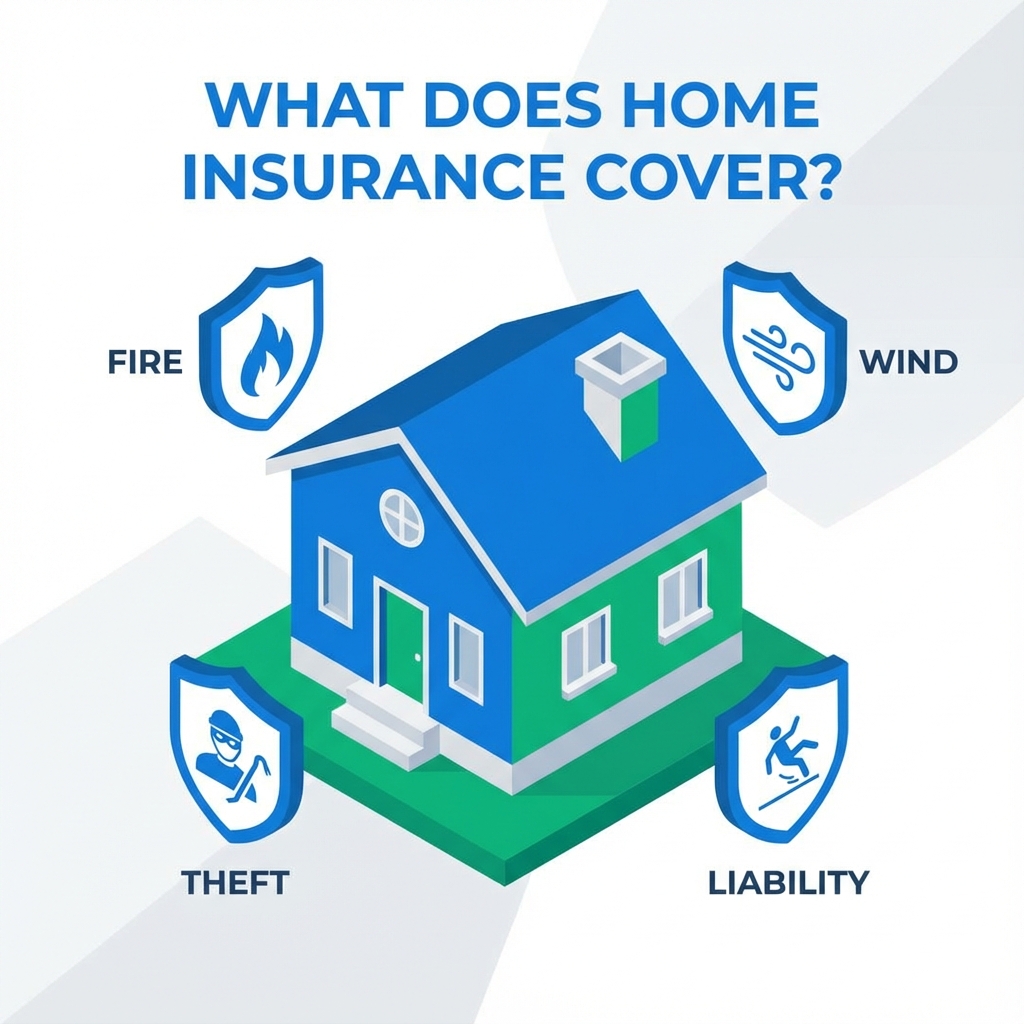
What Does Home Insurance Cover? The Standard HO-3 Explained
Your home insurance policy is likely 40 pages long, filled with dense legal jargon, and hidden in a filing cabinet. Most homeowners have no idea what is actually in it until disaster strikes—and by then, it's often too late.
The vast majority of US homeowners have what is called an HO-3 Special Form Policy. This is the "gold standard" for home protection. But even the gold standard has holes. In this guide, we are translating the HO-3 policy into plain English, walking you through the six core protections, and highlighting the surprising things that are not covered.
The 6 Pillars of Protection
Every standard policy is built on these six coverage types, labeled A through F.
Dwelling Coverage
What it protects: The physical structure of your home (walls, roof, floor,
lights).
Key Rule: It covers "open perils," meaning it covers everything
unless specifically excluded (like floods or earthquakes).
Other Structures
What it protects: Detached structures like fences, sheds, detached garages,
or gazebos.
Limit: Usually 10% of your Dwelling Coverage (e.g., $40k if your home is
$400k).
Personal Property
What it protects: Your "stuff" (furniture, clothes, electronics). Even if
stolen from your car!
Limit: Usually 50-70% of Dwelling Coverage.
Loss of Use (ALE)
What it protects: Extra costs to live elsewhere (hotel, food) while your
home is being repaired.
Limit: Usually 20% of Dwelling Coverage.
Coverage E & F: Liability & Medical
This is the lawsuit protection. Coverage E (Personal Liability) pays for lawyers and judgments if you are sued for bodily injury or property damage (e.g., dog bite, slip and fall). Coverage F (Medical Payments) pays small medical bills for guests injured on your property, regardless of fault, to prevent lawsuits.
Common "Perils" That Are Covered
Under an HO-3 policy, your dwelling is covered for almost any sudden, accidental damage. Your personal property, however, is usually only covered for these 16 specific "named perils":
- check Fire and Lightning
- check Windstorm and Hail
- check Explosion
- check Riot or Civil Commotion
- check Aircraft damage
- check Vehicle damage
- check Smoke damage
- check Vandalism
- check Theft
- check Falling Objects
- check Weight of Ice/Snow
- check Accidental Water Overflow
- check Freezing of Pipes
- check Power Surge Damage
What Is NOT Covered? (The Big Exclusions)
This is where people get in trouble. Standard policies rarely cover:
- Floods: Water rising from the ground (rain, river, ocean) is never covered.
- Earthquakes: Earth movement (quakes, sinkholes, landslides) requires a separate rider.
- Pest Infestation: Termites, rats, and bedbugs are considered a maintenance issue.
- Wear and Tear: Rotten wood, old roofs, and peeling paint are your responsibility.
Conclusion
An HO-3 policy is a powerful shield, but it isn't magic. It protects you from the sudden and catastrophic, not the gradual and predictable. Review your "Declarations Page" today. If you live in a flood zone or earthquake country, buy the extra protection. Being over-prepared is always cheaper than being under-insured.
Frequently Asked Questions
What is the difference between HO-3 and HO-5? expand_more
Does my policy cover my home business? expand_more
HomeInsuranceQuotes360 Team
Policy Analysis Desk